GI
Guido Iafigliolaon X · at the close of build 101
When people come at you with doom and gloom about AI, tell them what happened at @build101 and ask them what they did for others without AI.
// mutuo · chronicle · build 101 · oct 17 & 18, 2026 · fium · latu
Three AI apps won build 101. All three were up and running in a single weekend. A real-time phone scam detector, a sign language interpreter and a tool that adapts exams for students with learning difficulties. At 10 a.m. on Saturday they didn't exist. By 11 a.m. on Sunday they were working. This is the story of how they got there, alongside 30 other products, at the largest AI hackathon in Uruguay, which we co-organized at Mutuo together with Universidad de Montevideo, its School of Engineering and build 101.
// saturday 17 · 09:00
the clock starts.
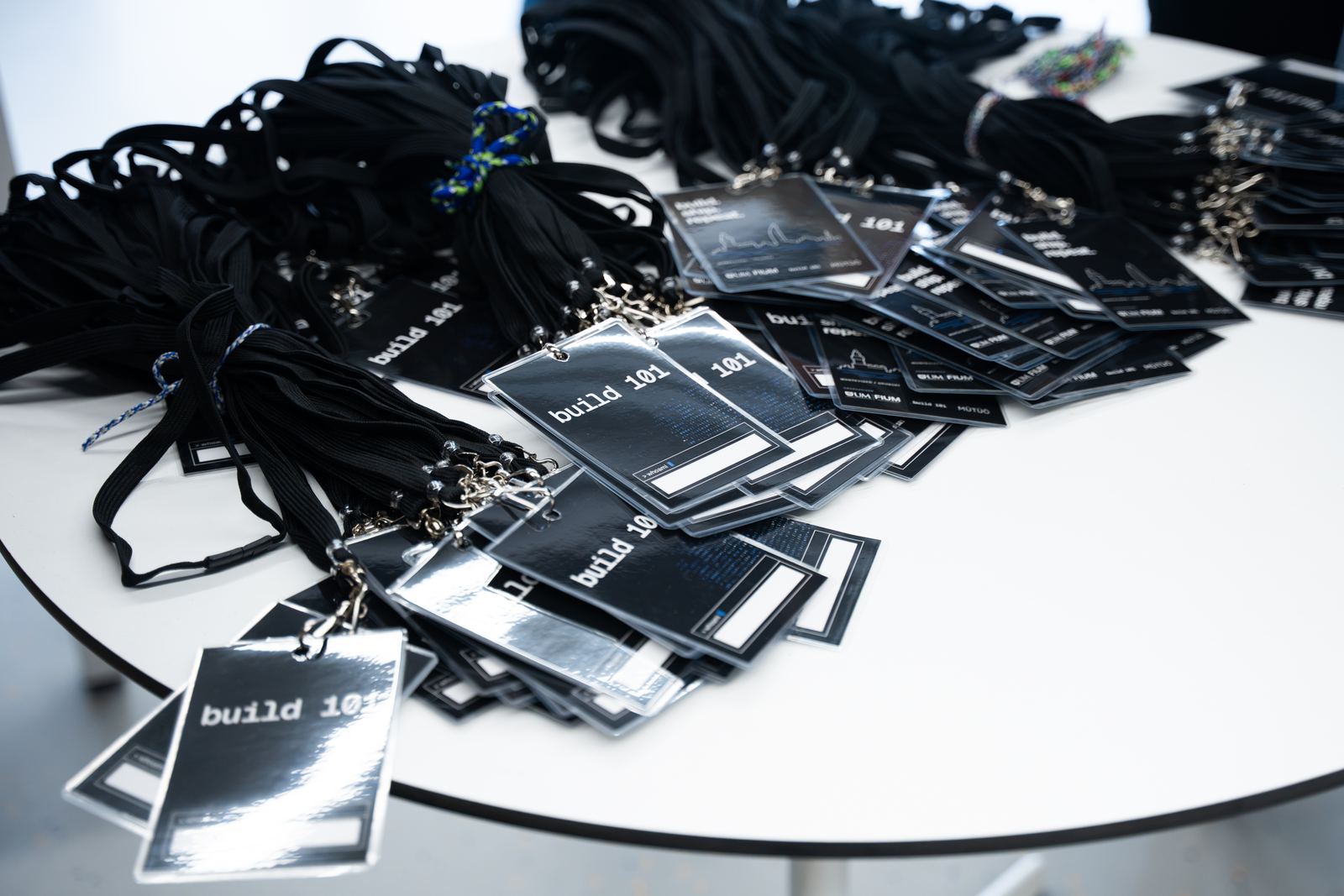
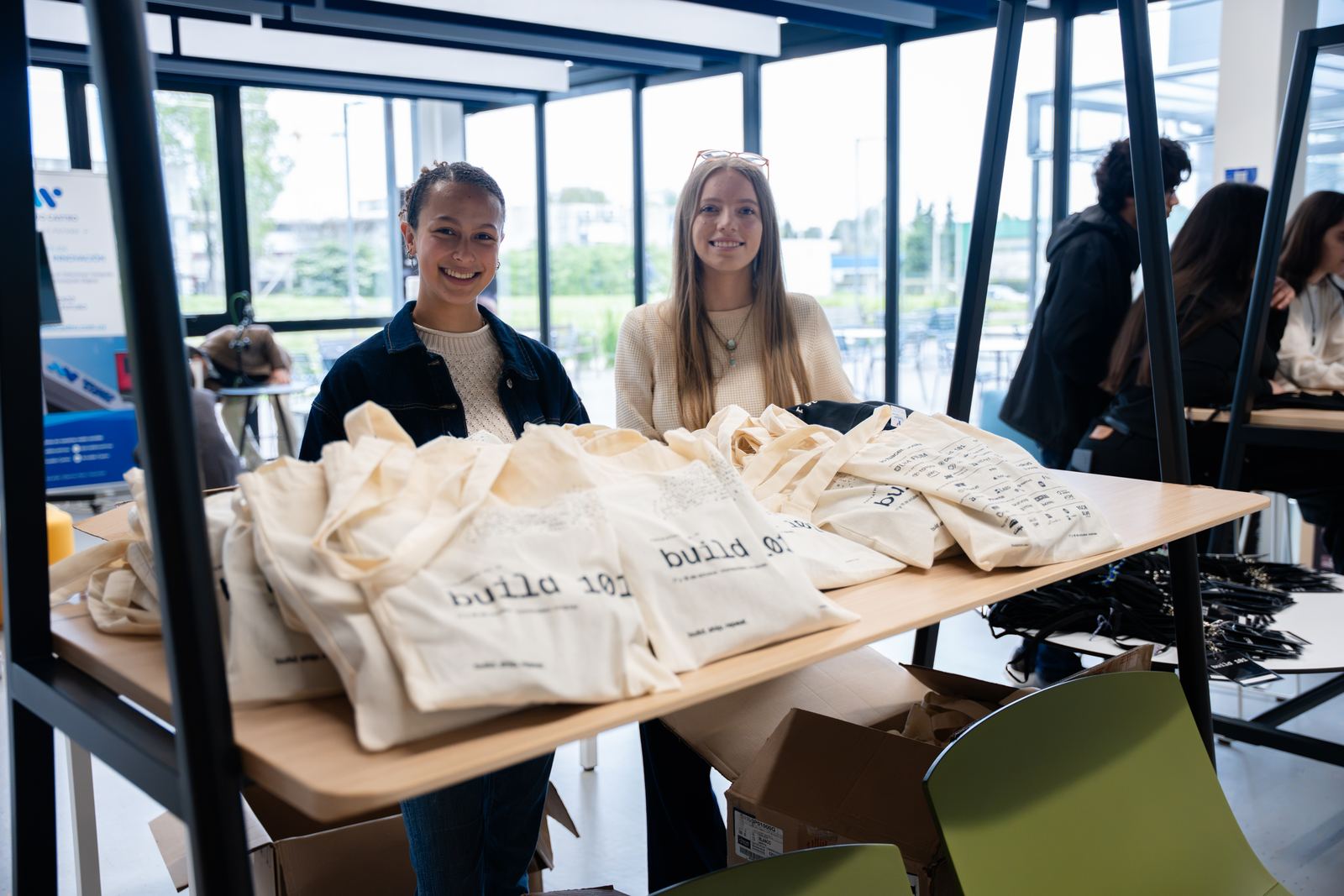
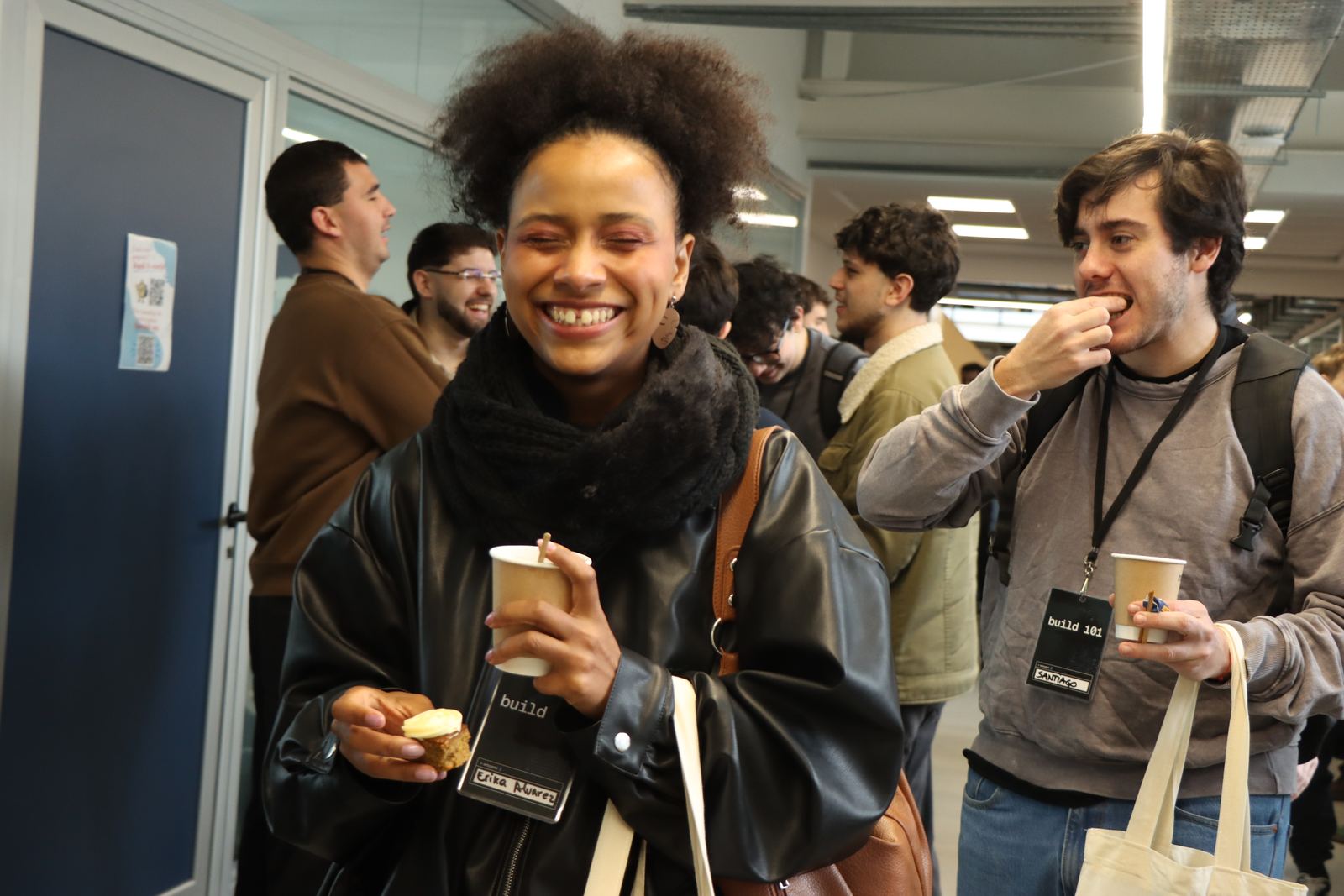
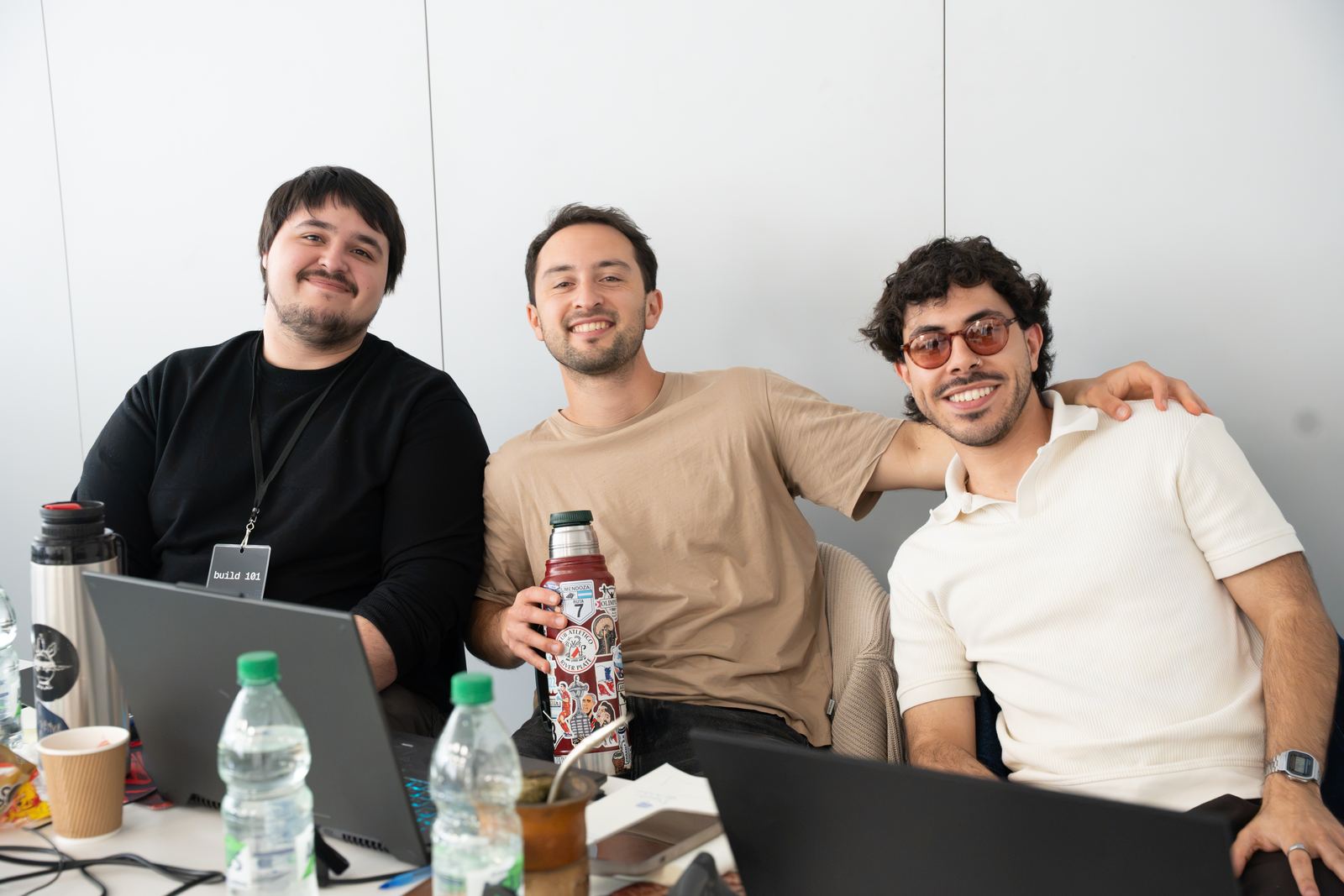
At 9 a.m. on Saturday, the scene looked like any beginning. A line to check in, black badges scattered across a table, bags with the welcome kit, coffee, thermoses and mates that hadn't started making the rounds yet. People greeting each other with half their face still asleep and the other half already thinking about what they were going to build.
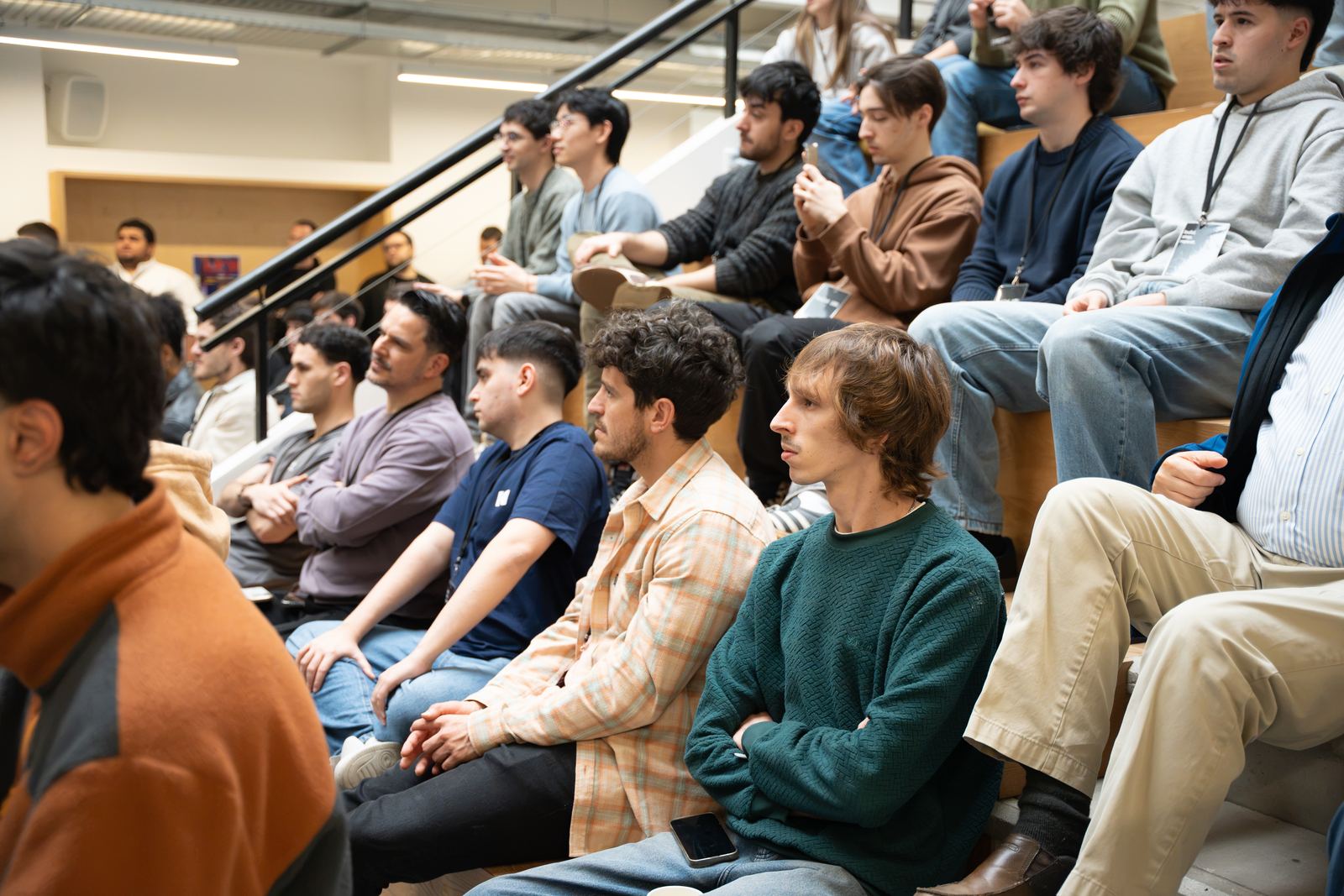
Half an hour later, the auditorium of UM's School of Engineering, on the LATU campus, was full. A welcome from the university, a welcome from build 101, a walkthrough of the tools they would have at hand. And at 10 sharp, the clock started.
From that moment on, 99 people had a single task: make it to Sunday with a working product. Not an idea, not a polished pitch, not a "we're on it". A product that could be shown live, in front of a jury of people who had built real companies.
// what build 101 was
one weekend.
"Hackathon" is one of those words a lot of people hear and few really understand. It's a competition to build something as a team, from scratch, in very little time. build 101 had a single, deliberately open brief: build a product where artificial intelligence is at the core. "Build a product, whatever you want, as long as AI is central," is how Mateo Vidal, one of its creators, put it.
It was conceived by three co-founders of Uruguayan tech companies: Ramiro Martínez (OrderEAT), Bruno Ramos (Horizon) and Mateo Vidal (nBlock). It was co-organized by Universidad de Montevideo, its School of Engineering (FIUM), build 101 and Mutuo. It took place on Saturday 17 and Sunday 18 October, and it was free.
At first, the organizers feared that such a broad brief would complicate everything, especially the judging. How do you compare a scam detector with a model that looks at cows? The opposite happened: that freedom meant every team went after the problem it truly cared about. And it showed in the results.
302 people applied. 99 were selected, in 33 teams of 3, exactly the number the organizers had planned from the start. And something unusual happened for this kind of event: not a single team dropped out during the week before. "They understood this was for them and that it was a huge opportunity, and they made the most of it," said Vidal.
// the pulse of the code
saturday 17.
sunday 18.
The hackathon clock, told in commits.
// before the numbers: what is a commit
Several figures in this piece are counted in commits. A commit is every time a team saves a change to its code, like hitting "save" on a document, but recording the time, who made it and a short note about what changed. Counting them is a very concrete way to see how much and when people worked: each commit is one more small step toward the finished product.
There's a very honest way to tell the story of a weekend like this: look at the commits, those code "saves" we just explained. build 101 gathered them from all 33 teams and published them in its wrapped. Laid out on a timeline, they are the electrocardiogram of the event.
The start is shy. Between 10 and 11 on Saturday there were just 20 commits: the teams were still deciding what to build. After lunch the curve starts climbing and never stops. At 6 p.m., 382 commits. At 7 p.m., the peak of the entire weekend: 496 commits in a single hour. By then nobody was debating anything. They were building.
And then, at 9 p.m., the school closed. The chart didn't notice.
sat 10:00 to sun 10:59 · 33 teams · total 4,160
In dark gray, the hours when the school was closed (9 p.m. to 9 a.m.). Source: build101.dev/wrapped.
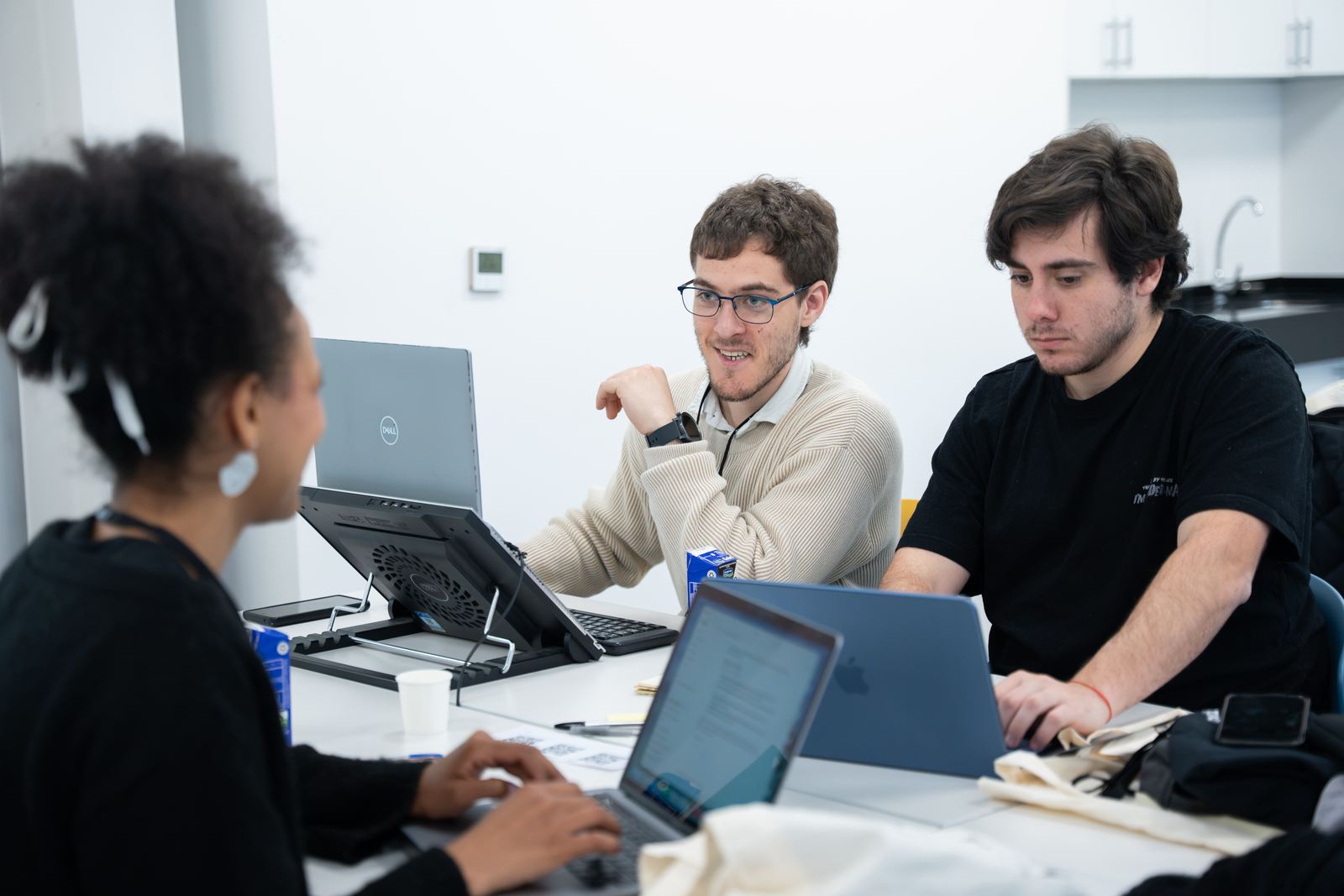
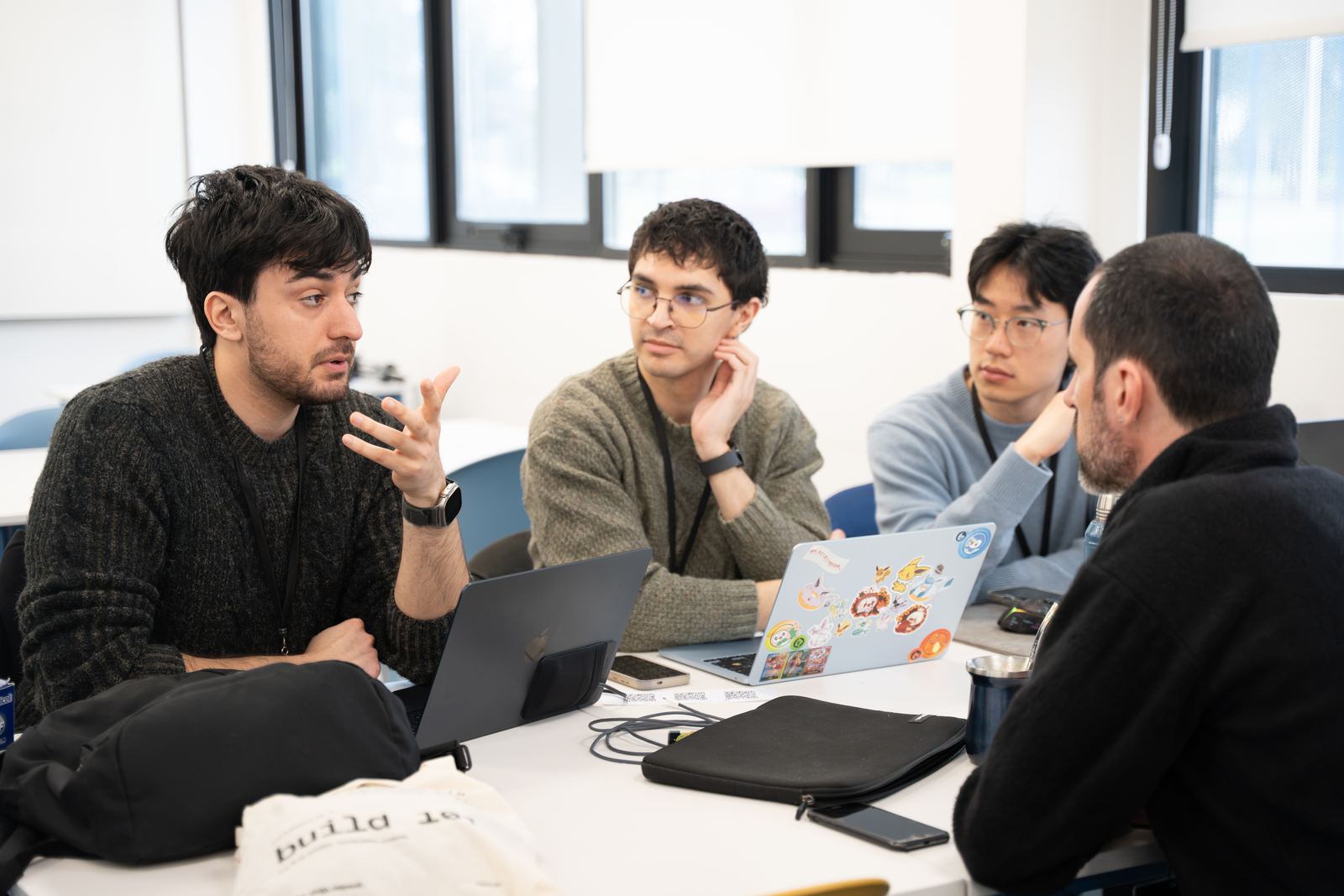
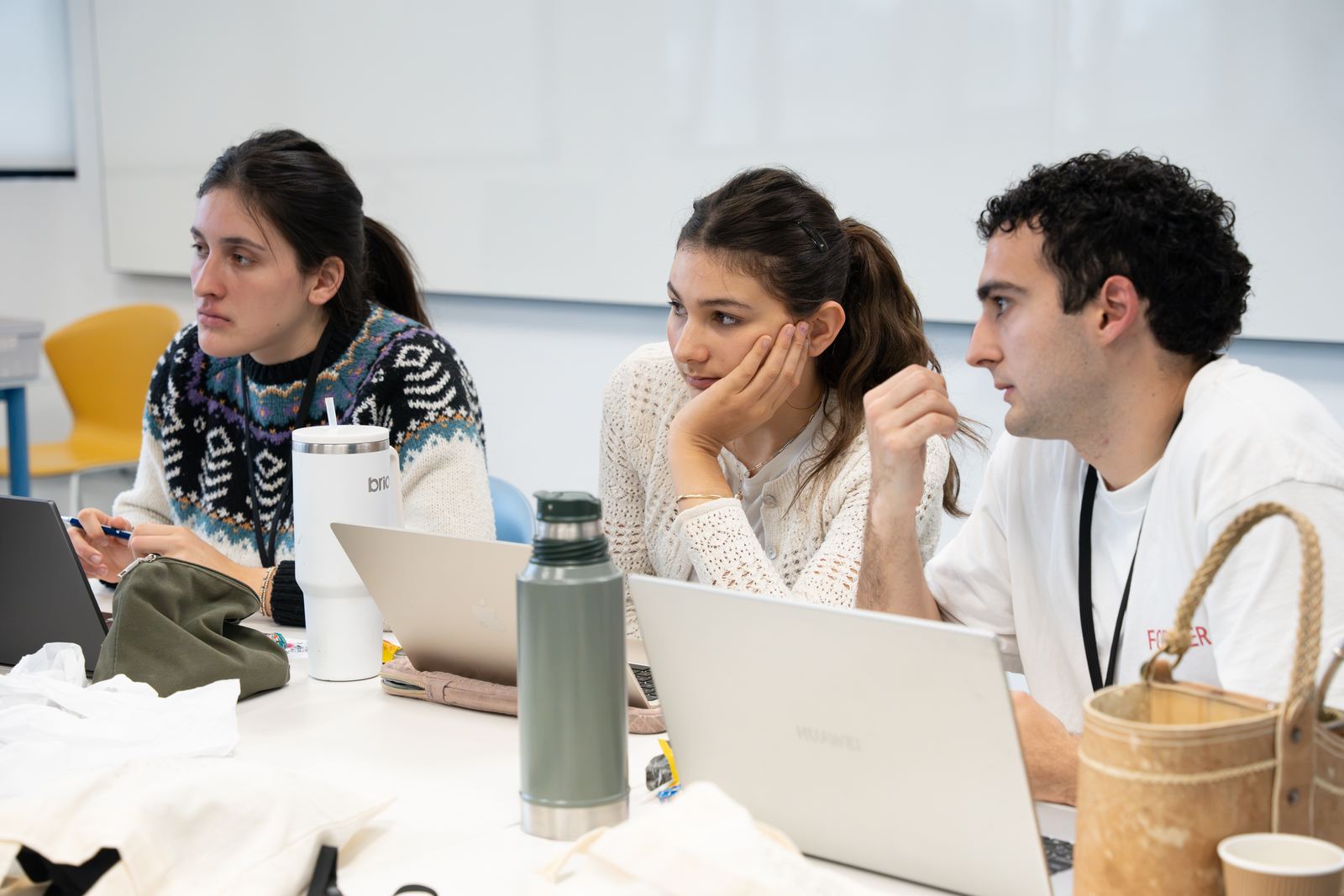
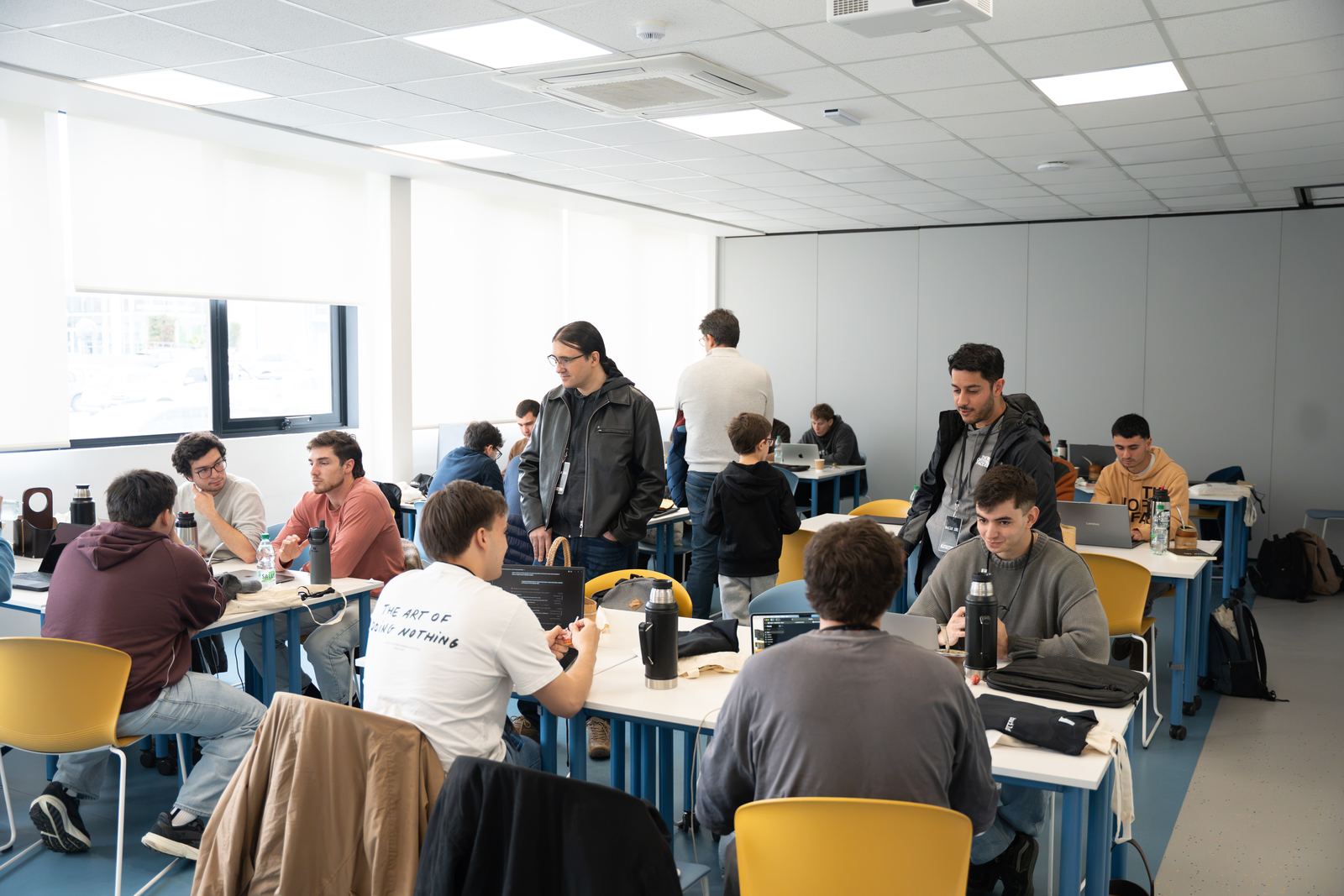
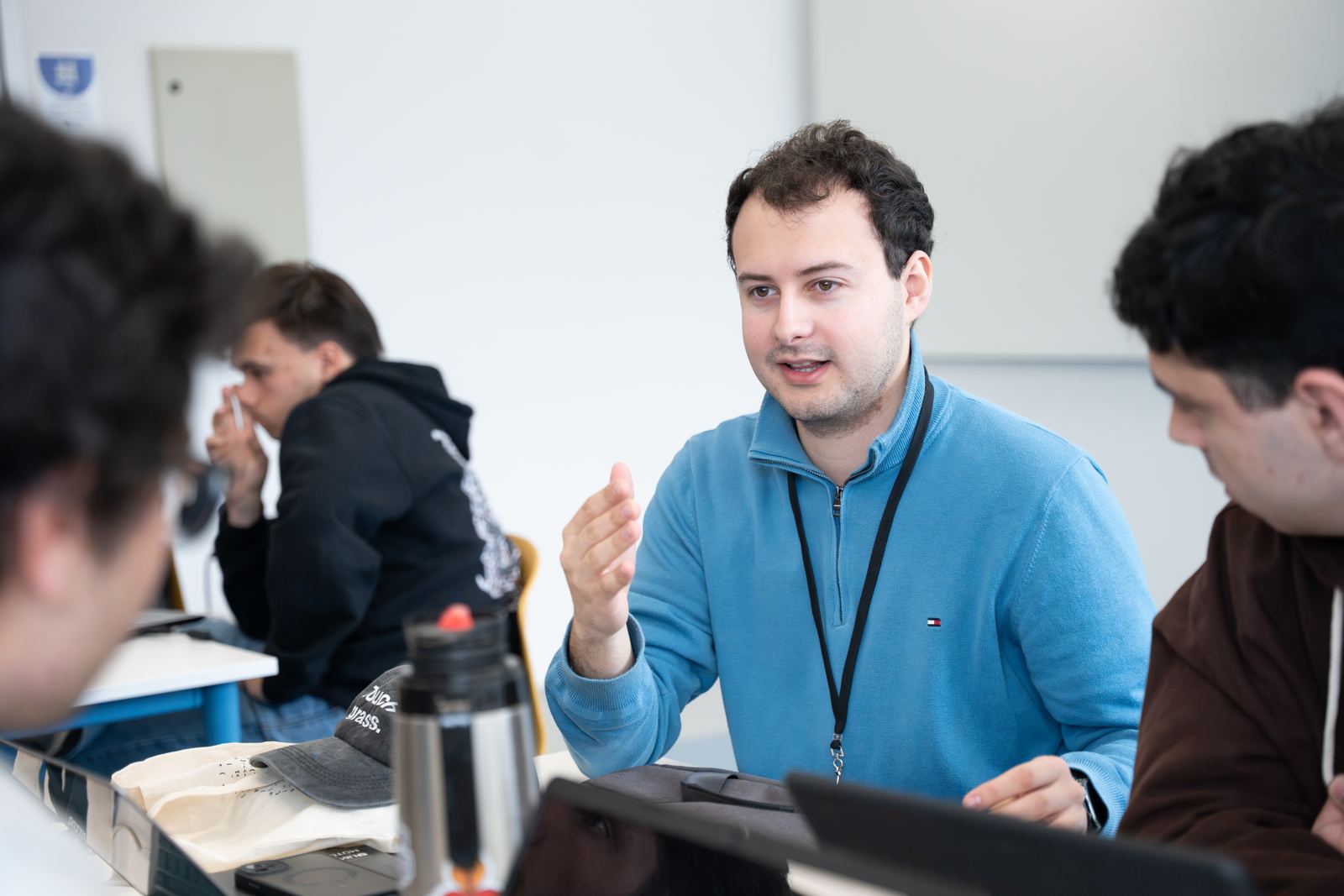
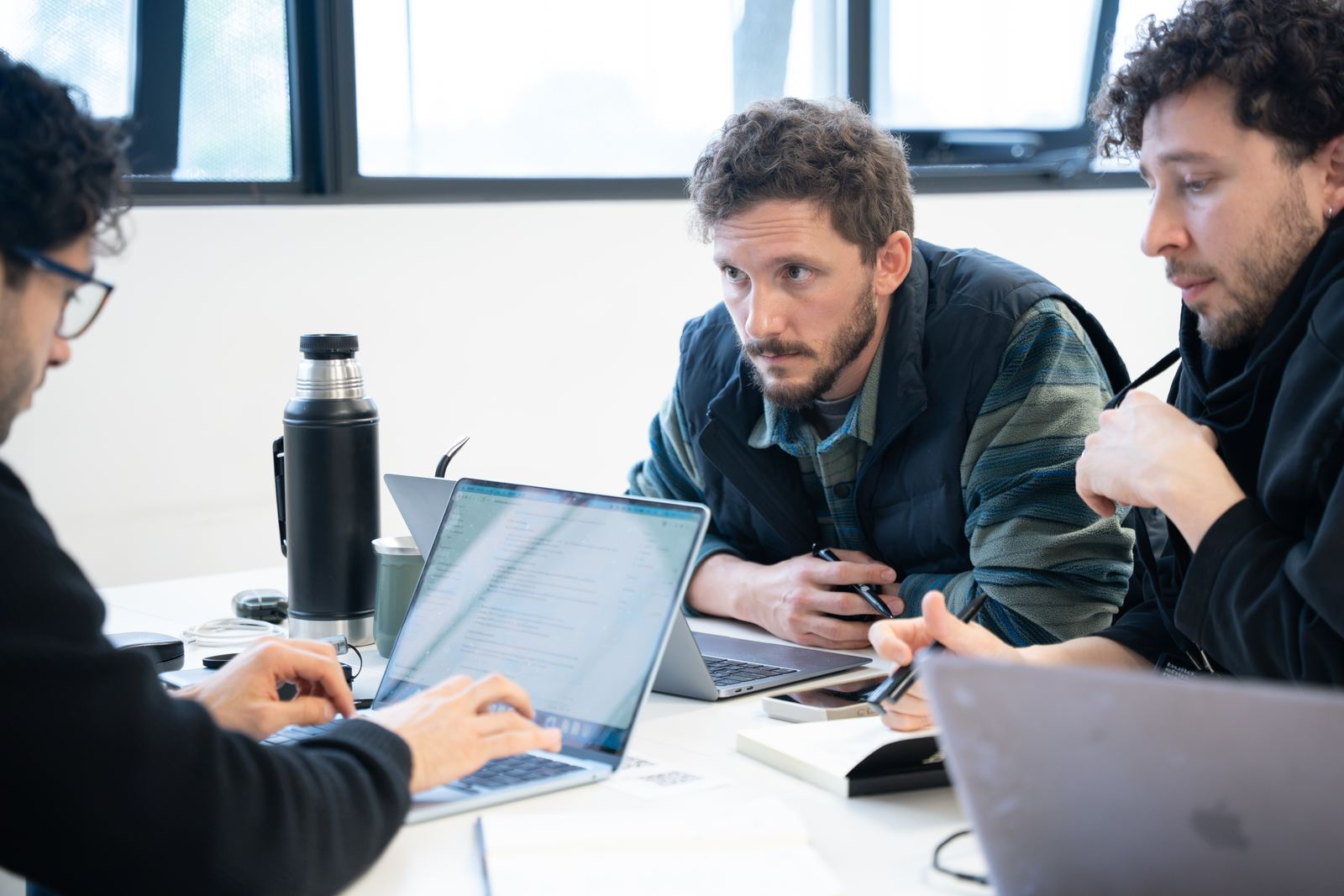
On Saturday afternoon the school felt like a cross between a newsroom and a restaurant kitchen. Tables with three open laptops and a thermos in the middle. Mentors moving from team to team, sitting down for five minutes, pointing at a screen and moving on. The background noise was many conversations at once, all about the same thing: what's missing to make this work.
// saturday night
21:00 → 09:00.
The school closed. The teams moved on to someone's house.
At 9 p.m. the organizers had to hand the building back. On paper, that was the end of day one. In practice, the second shift was starting. "I didn't talk to a single team that didn't go off to keep working at someone's house that night," said Vidal.
There's a postcard from build 101 with no official photo: dozens of homes with three people around a table and code running. At 1 a.m., the organizers asked every team for a mandatory photo. The vast majority sent one.
The commit log tells the rest. At 11 p.m. the pace picked up again: 236 commits, double the previous hour. At midnight, 262. The quietest hour of the whole night, from 6 to 7 a.m., still had 34. There's a commit at 04:59 (team SOLO, finishing its product page) and another at 05:03 (team UnifyAI, writing a test). Between Saturday's start and Sunday's close there wasn't a single hour without new code.
On Sunday at 9 the doors opened again. At 11 the code was frozen. In the last 15 minutes, 25 commits came in from 13 different teams: that final tweak that always feels essential and almost never is, but that nobody dares to leave undone.

// what was new
AI in the kitchen.
What build 101 had that no hackathon in Uruguay had before.
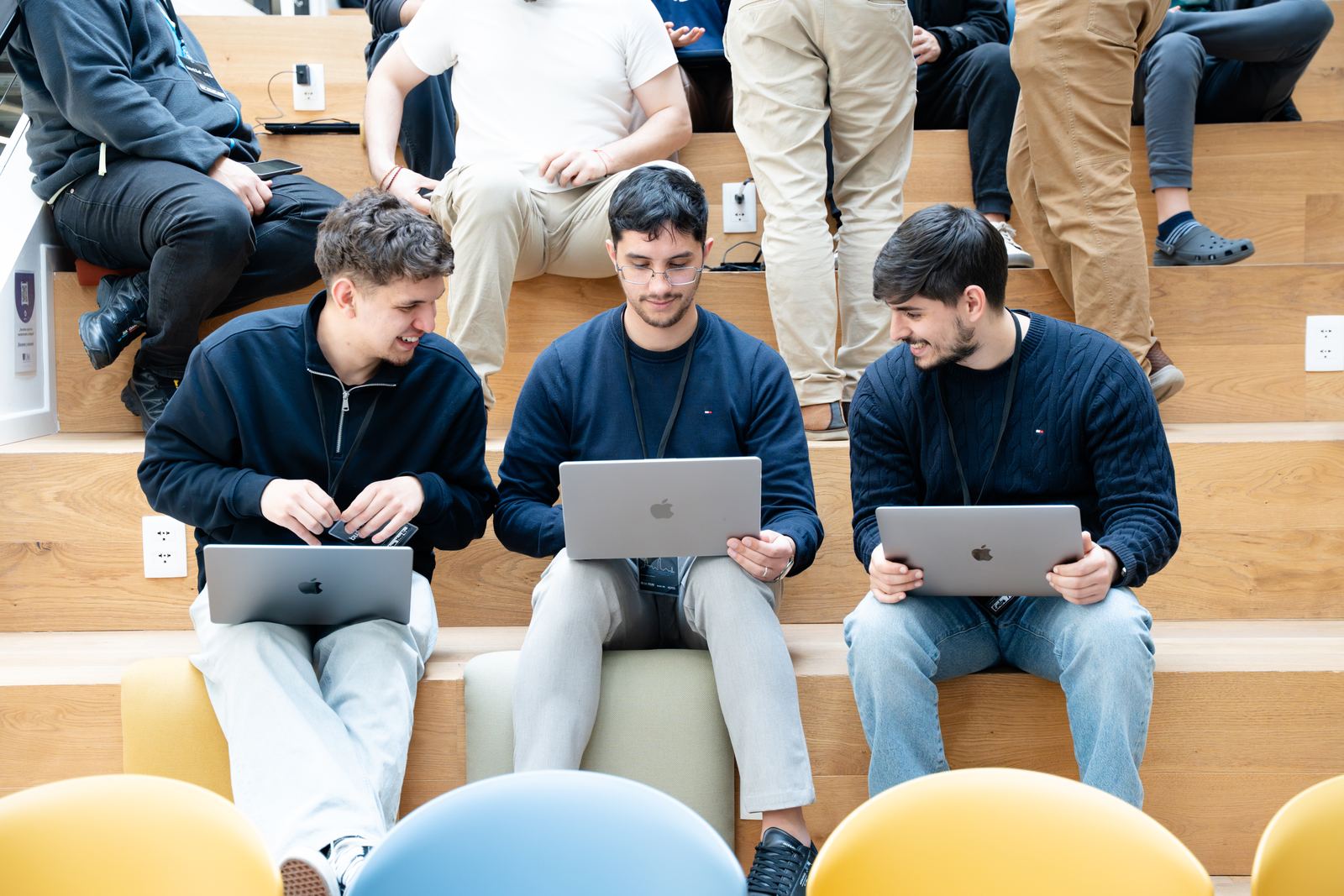
A few months ago I wrote on this same blog that software was the era of instructions and artificial intelligence is the era of intentions. That when the how becomes cheap, all the weight falls on the what. build 101 put that idea to the test, live, for 25 hours.
Because what you saw at the tables wasn't people asking a machine to do things for them. It was people directing: deciding which problem was worth solving, for whom and within what limits, and handing an AI agent a good part of the heavy lifting of writing the code. The judgment stayed at the table. The execution sped up. That's how 33 teams made it to Sunday with working products instead of mockups.
86%
of commits (3,586 out of 4,160) were written together with an AI agent.
By agent: Claude, 3,585. Cursor, 1. Each dot is 1% of the total.
The charts below show what they built with. Anthropic was the most used AI provider, in 19 of the 33 teams, followed far behind by Gemini. TypeScript accounted for more than half of the code. React showed up in 28 teams. None of this is a coincidence: these are the tools that today let you go fastest from an idea to something you can touch.
teams that used each one
teams per model
% of the code
teams per framework
A team can use several providers, models and tools, which is why the bars add up to more than 33. Source: build101.dev/wrapped.
// the commits speak
fix. fix. final.
What 99 people wrote while saving their code in a rush.
Commit messages are the private diary of any project. They're written fast, without thinking anyone will read them, and that's why they tell the truth. At build 101 they say this: there were 475 commits with the word "fix", which is how you flag that something broke and got repaired. 38 said "final". And none, not a single one, said "please".
in commit messages (mostly in spanish)
"demo" won by a mile: the whole weekend was aimed at the live presentation. "tenki" shows up 64 times: Tenki, one of the event partners, was one of the platforms the teams used.
// the monster commit
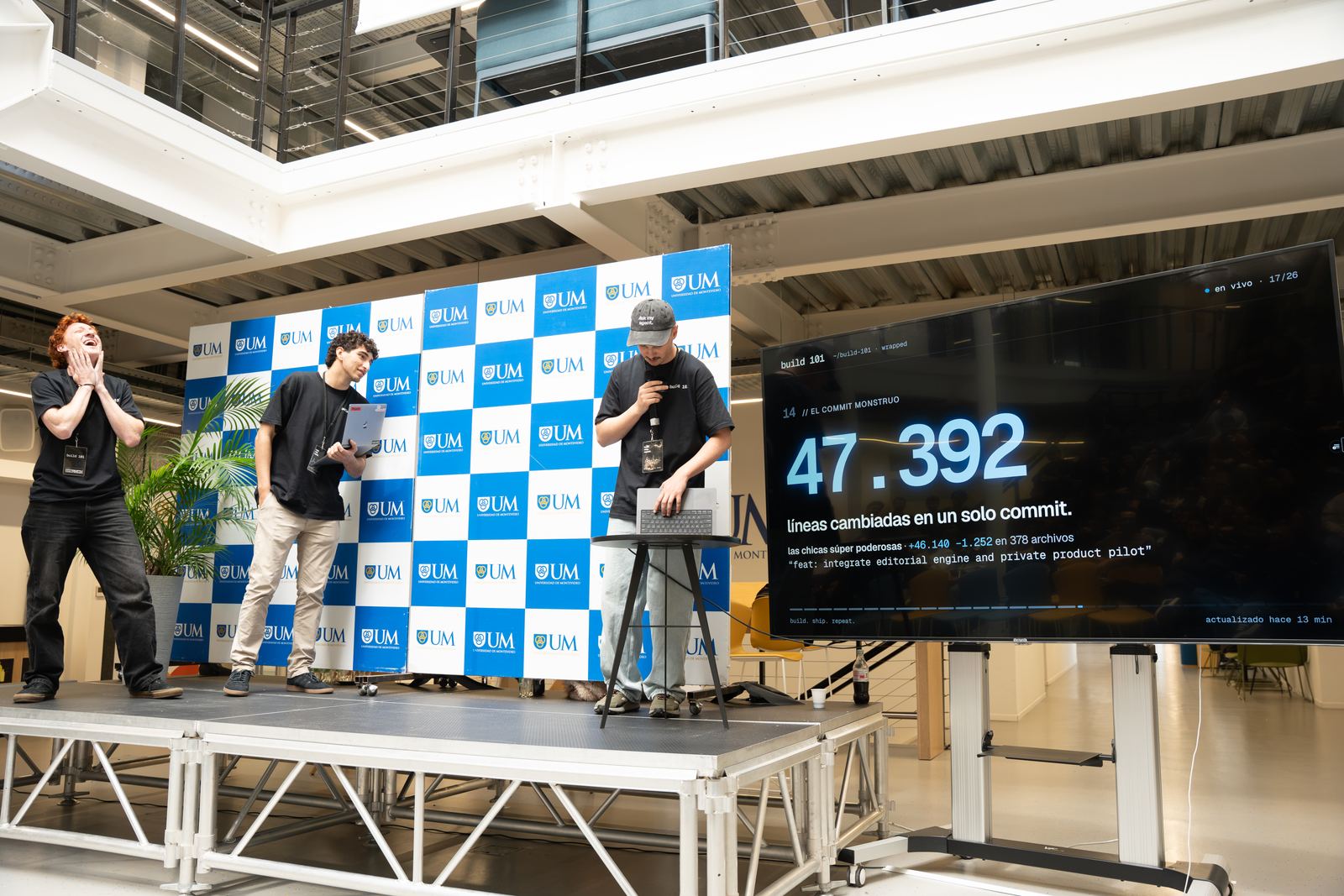
47,392
lines in a single commit. It came from team "las chicas súper poderosas" (Hooksage, the one that turns recordings into short videos for social media): 46,140 lines added, 1,252 deleted and 378 files touched. The number ended up on the big screen on Sunday.
At the other end, the shortest commit of the weekend has three letters: "aad". It was written by team Claude & Asociados. Remember that name: it'll come back.
// sunday 18 · 11:00
what works is what counts.
From frozen code to the winners announcement, in three and a half hours.
At 11 on Sunday the hackathon ended and something else began. Half an hour to breathe and review, and at 11:30 the first round of judging. The 33 teams were split into three qualifying groups and each one showed its working product, live, to the jury. No slides full of promises. If it worked, you saw it. If it didn't, you saw that too. And they all worked: all 33 teams reached the presentation with a working product.
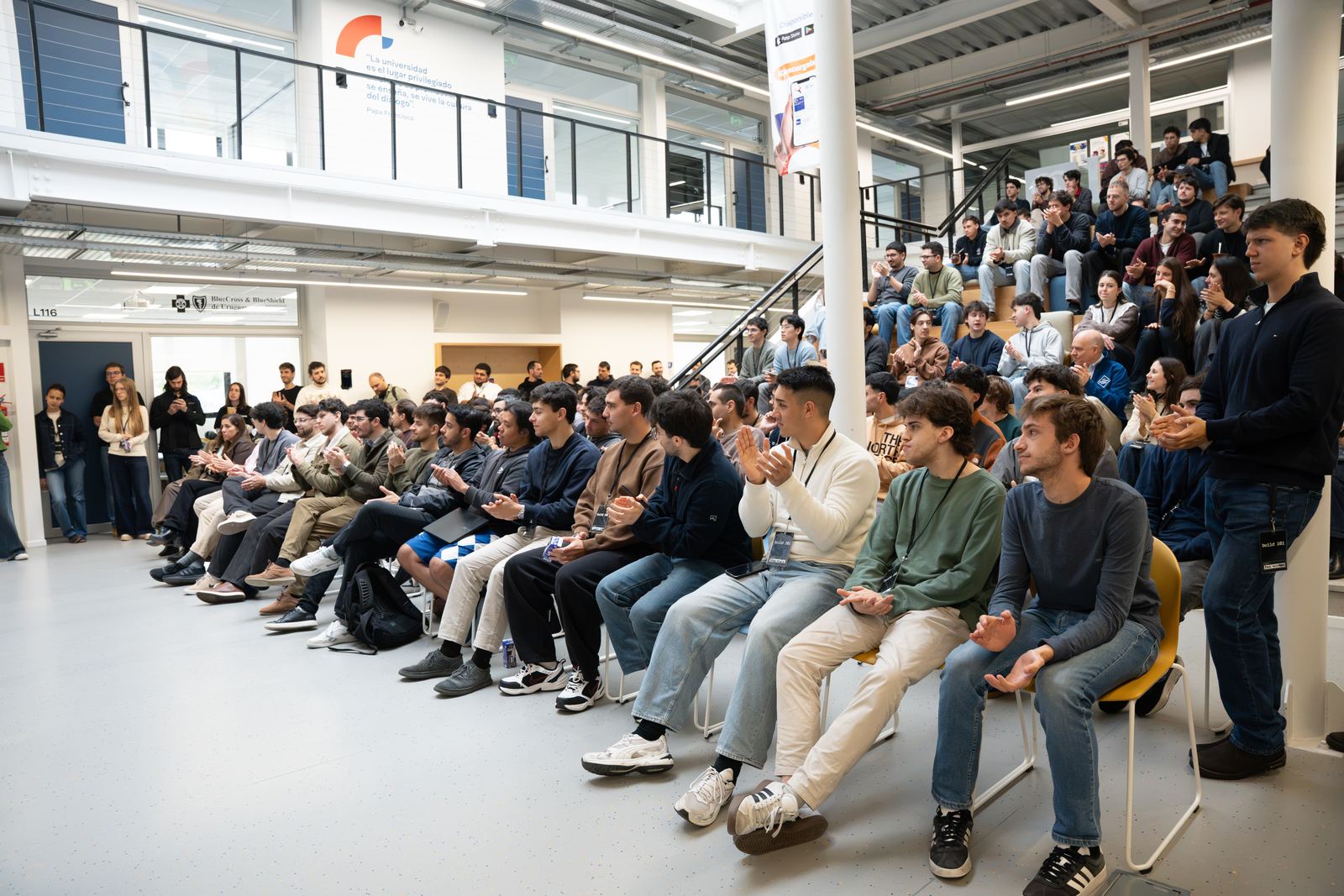
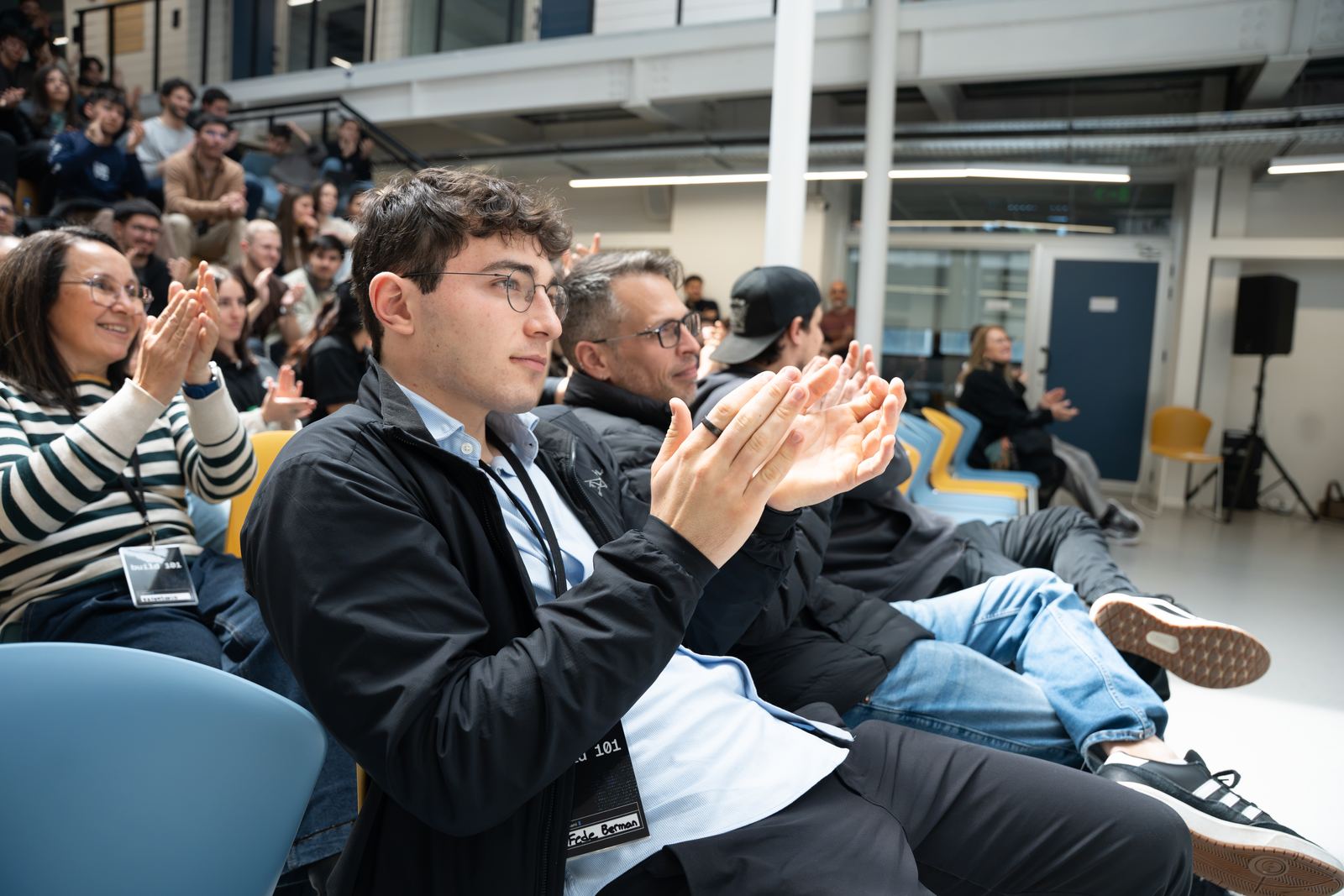
At 1 p.m. the finalists were announced: the best of each group. At 1:30, the final, in front of the full jury and a packed hall. And that's when something happened that took a weight off the organizers. With such an open brief, judging could have turned into an endless debate. According to Vidal, "it flowed naturally": every juror agreed on who deserved to win.
The jury brought together founders, investors and product leaders. People who have seen up close how a company is built and who, precisely because of that, can quickly tell the difference between something that works and something that merely presents well.
// the jury, among others
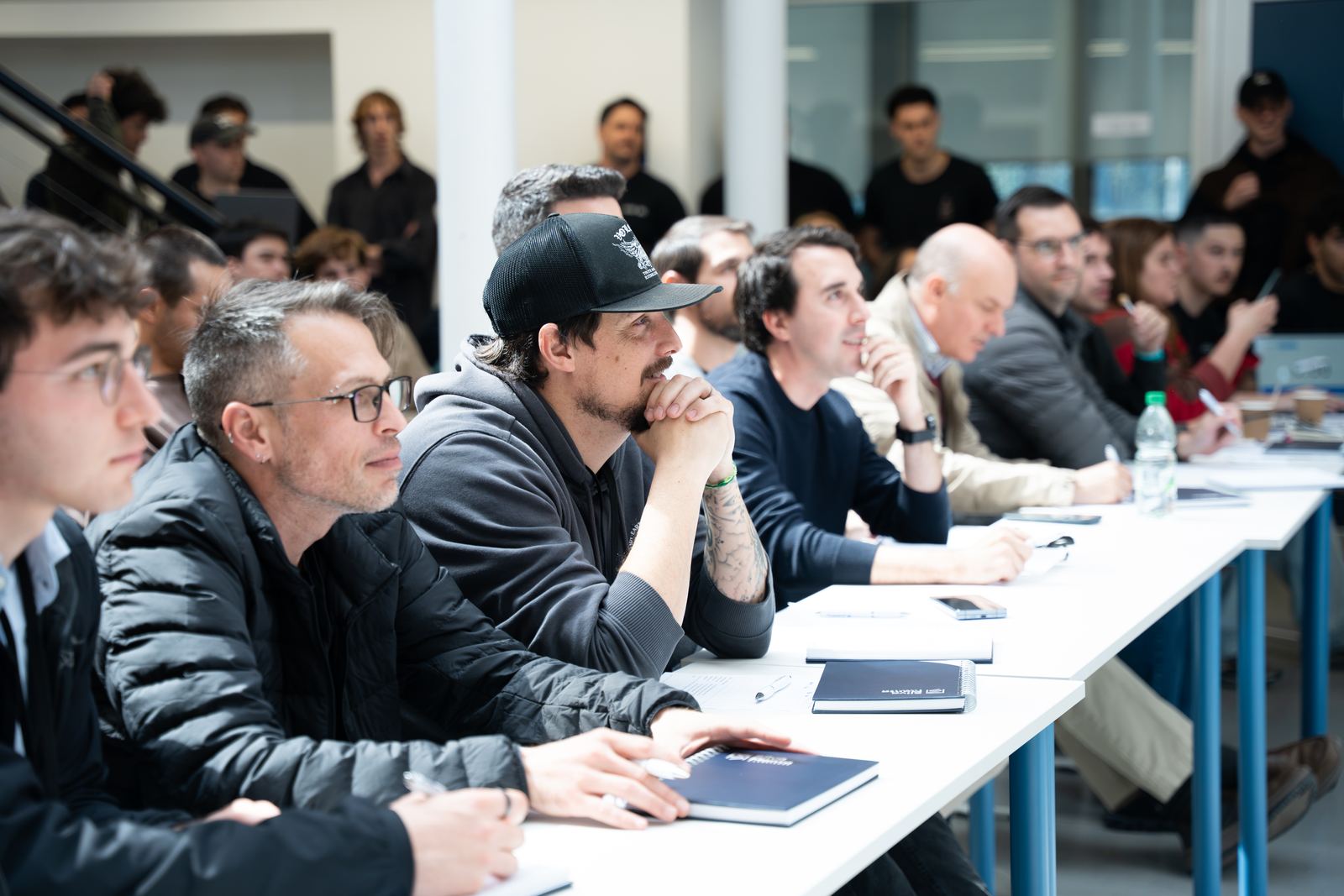
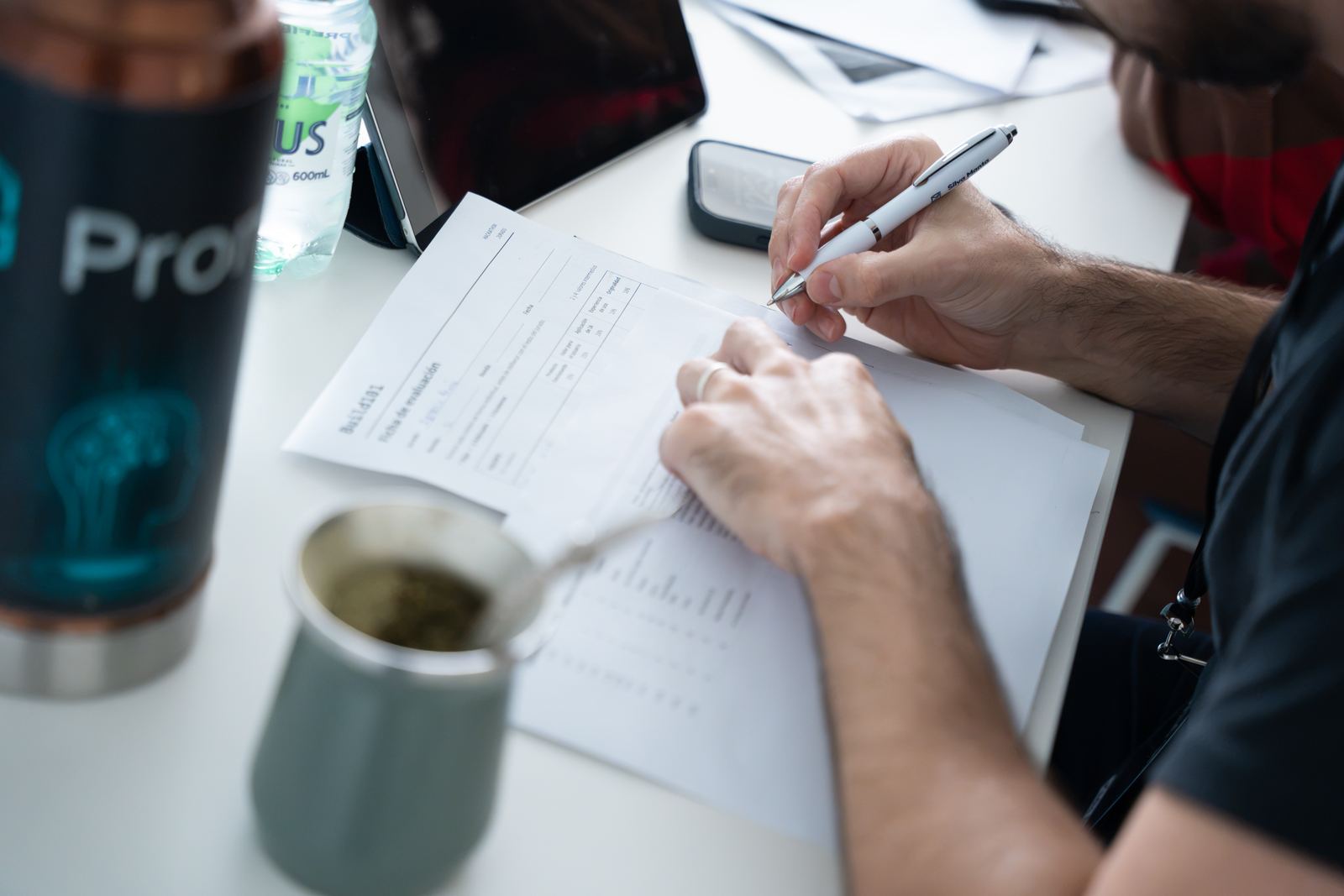
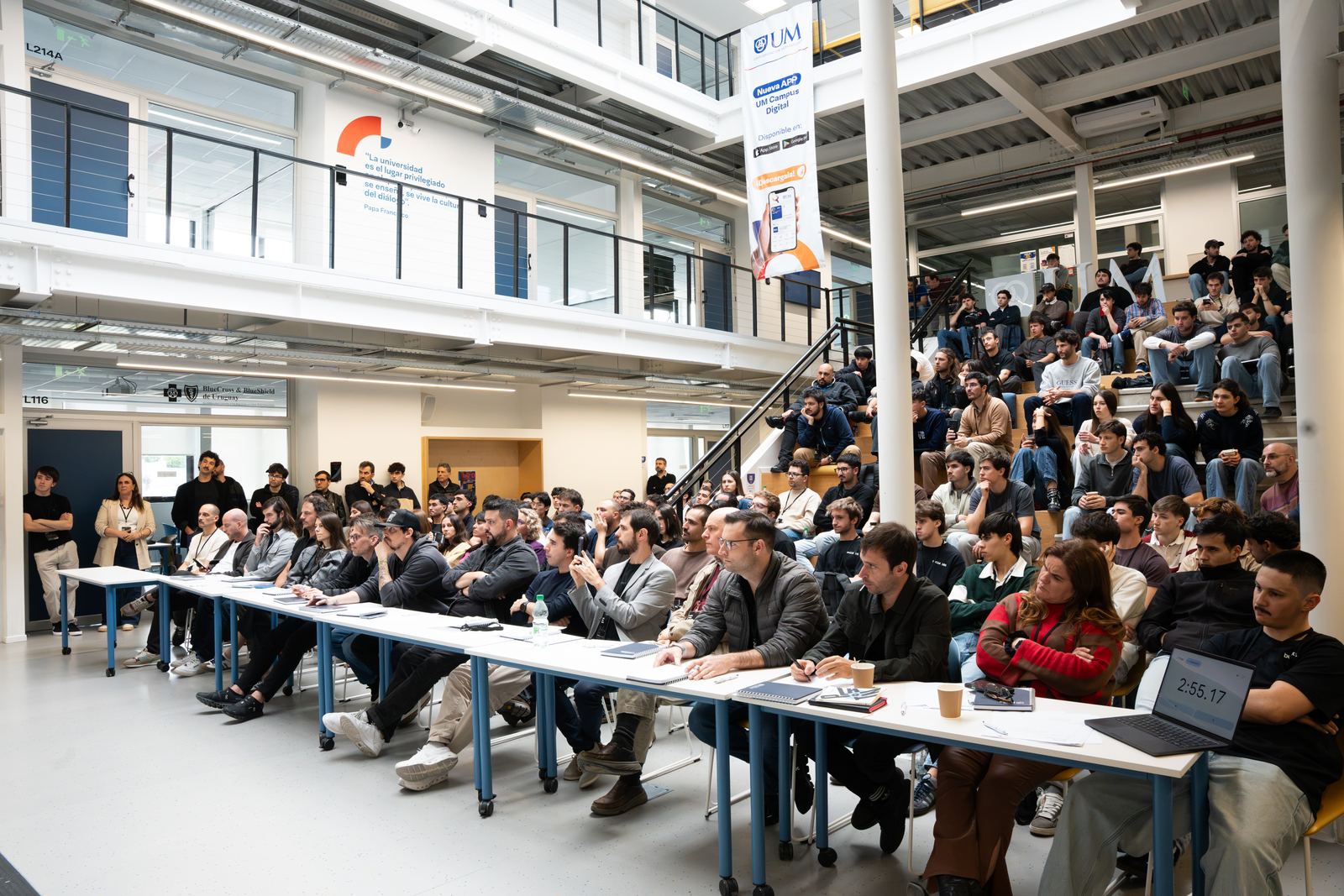
sun 18 · the final, with a packed hall
// sunday 18 · 14:30 · the podium
3 apps.
From zero to working between Saturday at 10:00 and Sunday at 11:00.
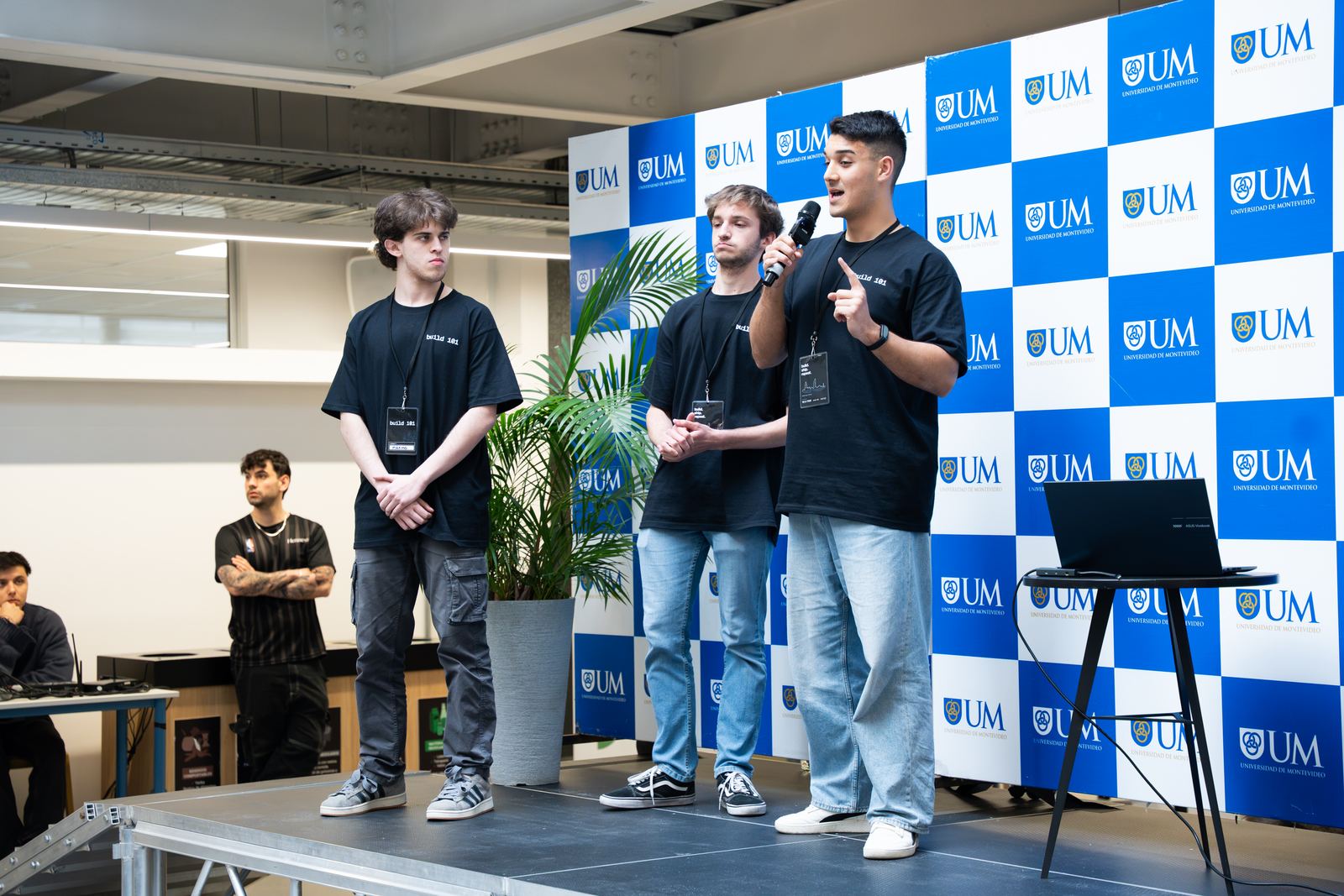
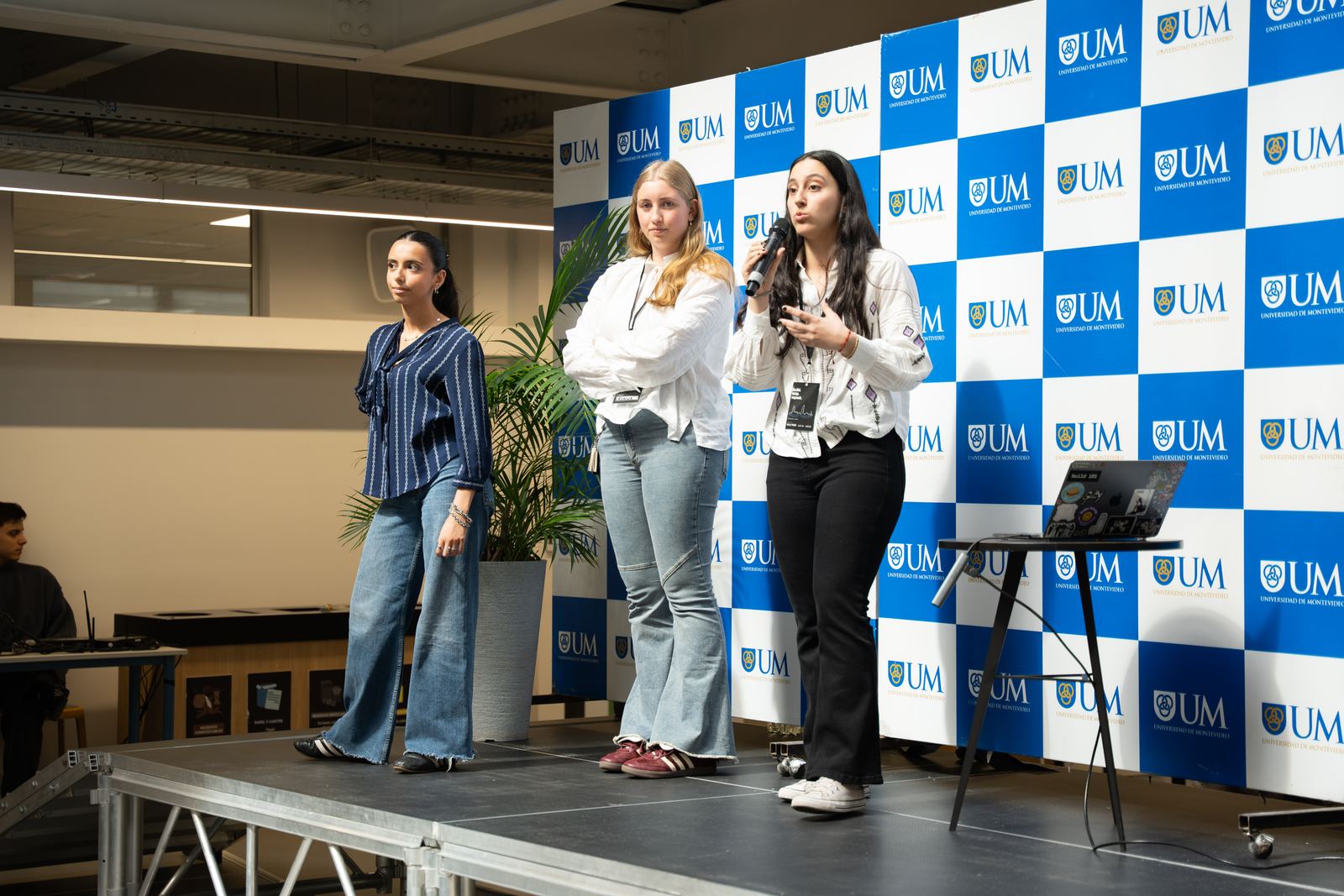
At 2:30 p.m. the winners were announced. And when you look at the top three together, a pattern appears that none of the teams was looking for and that says much more than any prize.
01.
1st place
It warns you if your grandmother is being scammed over the phone. While the call is happening.
An Android app listens to the call, transcribes it live and the AI scores the risk sentence by sentence, from 0 to 100. If the number goes up, the screen turns red and the family gets a WhatsApp alert. If the model takes more than 9 seconds to answer, keyword rules kick in: a con artist doesn't wait.
In the live presentation, one member played an elderly woman, another the scammer and the third the relative the system alerted. The detector relies on up-to-date information about phone scam patterns in Latin America. Yes: it's the same team behind the three-letter commit.
Bruno Colo, Pedro Morga and Matias Moser (ORT)

02.
2nd place
A sign language interpreter with a 3D avatar that translates both ways.
It turns speech, text or a photo of a page into Argentine Sign Language with a 3D avatar. And the other way around: the camera recognizes signs and says them out loud. It also works as a Chrome extension, to bring any content on the internet into sign language.
The problem it tackles is concrete. Many deaf people don't handle written Spanish well, so subtitles don't help them. Vidal's example: someone who wants to watch a Netflix series and can't follow it. The avatar has 1,350 signs loaded.
Bruno Romero (UdelaR, BitGarden), Juan Perrachon (UM, Infoclub Soluciones) and German Ipes (UdelaR, Perceptyx)

03.
3rd place
It adapts exercises for students with different learning needs, making assessments more accessible and inclusive.
The teacher uploads the worksheet and the AI builds a version for each profile in the group: ADHD, dyslexia, autism, dysgraphia or motor disabilities. A checker makes sure the numbers don't change and the teacher approves each version before it reaches the student.
One of the members is a teacher, and it shows. For students with motor disabilities, the app tracks eye movement through the computer's camera: in the presentation they turned a test into a multiple-choice exam answered with the eyes alone. "It worked perfectly," said Vidal. Students can also answer by dictating, and the app reads the instructions out loud.
César Canessa (UdelaR, Mutuo), Adrian Mircus (ORT, NoctiLabs) and Mauricio Parodi (ORT, Bamboo Payments). tiza-ai.vercel.app

The three apps on the podium have something in common: none of them is for the people who built it. They're for a grandmother, for a deaf person and for a student with learning difficulties.
This is not a detail. For months, the public conversation about AI swung between two poles. On one side, fear: it'll take our jobs, it'll replace us, it'll make us dumber. On the other, hype: everything is revolutionary, everything is disruptive, everything changes tomorrow. At build 101 there was neither. There were people picking up a new tool and pointing it at a concrete problem of someone close to them.
For me, that's the most important takeaway of the weekend. And it doesn't come from any chart.
// writing a lot wasn't enough
One last data point confirms build 101's motto. Sayso, the team with the most commits of the entire weekend (361), finished seventh, with a very good guide for repairing household appliances. Guardián won with 142. Tiza.ai came third with 46. The volume of code didn't decide anything. What decided it was what worked and who it served.
// the 33 products
from cows to parkinson's.
The variety was total. Each team solved the problem it found relevant.
The podium is what makes the headlines, but the full picture is more interesting. A vision model that estimates a dairy cow's body condition from a photo. A voice agent that takes horse racing bets at the Maroñas call center, where, according to Vidal, thousands of dollars are lost in the last 15 minutes of each race day because calls drop ("it sounds crazy but it happens"). A simulated patient so medical students can practice before their first real one. An assistant for families of children with autism and selective eating. A public tender analyzer for building supply stores.
All 33 finished with a working minimum viable product: a real first version, small but usable. Ten of them, almost one in three, are about caring for someone: health, wellbeing, older adults, accessibility. Fifteen solve business and work problems. And there's everything in between, from public space to career guidance.
products by topic · Mutuo's classification
Descriptions from build101.dev/equipos, where each team has its full profile, members and how they built it.
// the impact
monday.
The goal now is for the projects not to die on Sunday. Some are already moving.
Hackathons have a well-known problem: Monday. The lights go off, the teams break up, everyone goes back to their jobs and the projects end up stored in a repository nobody opens again. The organizers know it, and that's why the goal now is to support the projects so they keep going.
"It's the first event where, from one weekend to the next, you can have maybe 10, 15, 20 new startups in Uruguay," said Vidal. For him, if 15 of the 33 projects keep going "it would be a huge success". And even if ten, or five, continue, it still would be. On top of that there's something that isn't measured in startups: Vidal expects several participants to end up working at other companies thanks to this weekend.
On Monday, just one day later, things were already moving.
What I like most about this list is that it came out of the weekend itself: people who saw what they saw and decided to do something. That is, for me, the best measure of an event's impact: what people do on their own once the microphones are off.
// the concept
building and meeting.
If I had to sum up build 101 in one idea, I wouldn't choose the word "competition". I'd choose two others: building and meeting.
Building, because that can be measured and it's all in this piece: 33 products, 4,160 commits, a million and a half lines of code. Meeting, because that doesn't fit in any chart and it's probably the most valuable thing the weekend left behind.
Students next to professionals already working in the industry. A teacher building a product with two developers. Mentors going from table to table. Founders and investors watching every presentation with the product running, and asking for contacts at the end. People from all over the country and of all ages sharing tables, mate and screens for a whole weekend.
For years we've been told that technology isolates us, that everyone lives in their own bubble and their own screen. Maybe. But last weekend, a tool many point to as a threat was the perfect excuse for more than a hundred people to sit in the same room and solve other people's problems. An AI hackathon that turns out to be, above all, a place to meet. Which is exactly what was missing.
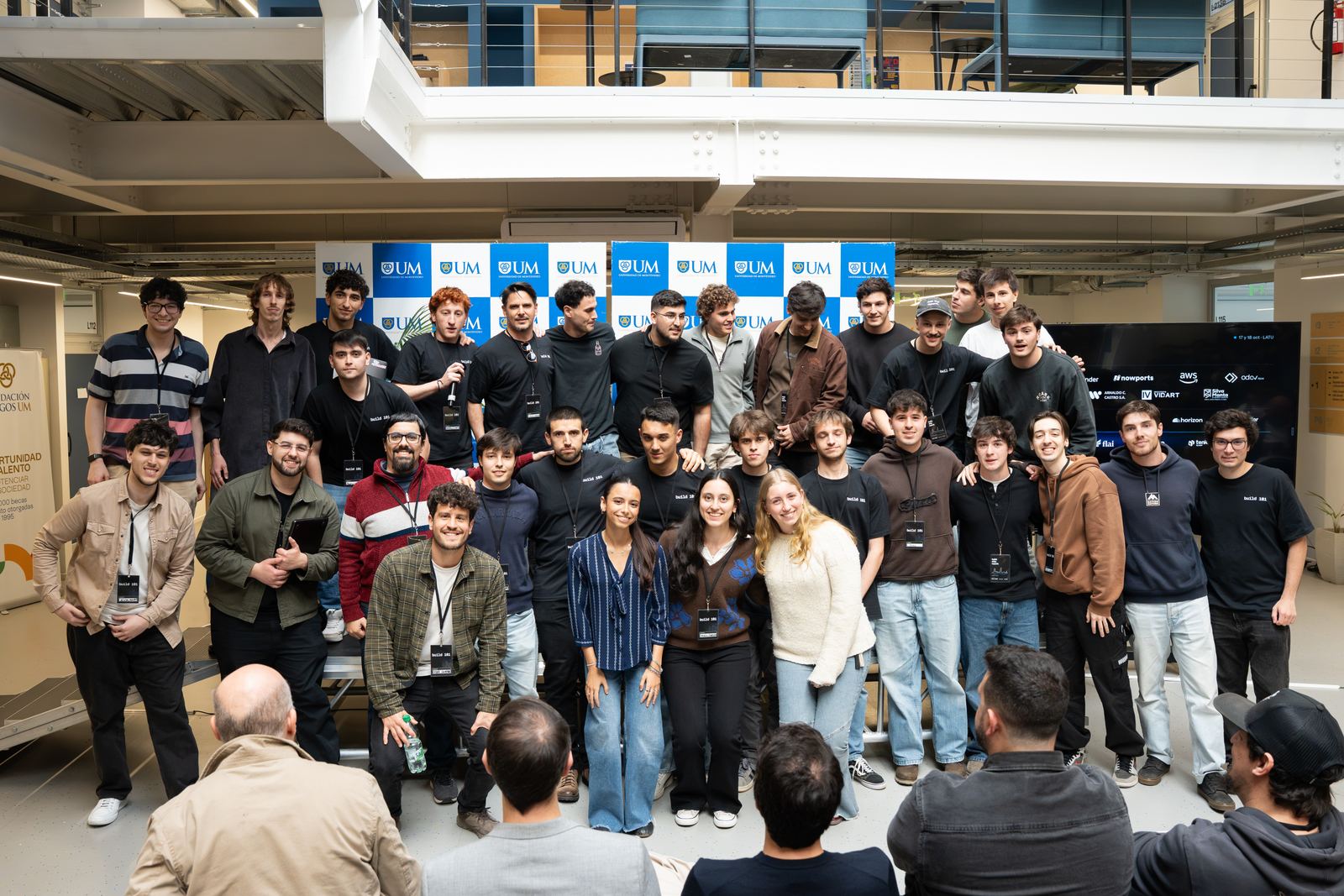
sun 18 · everyone
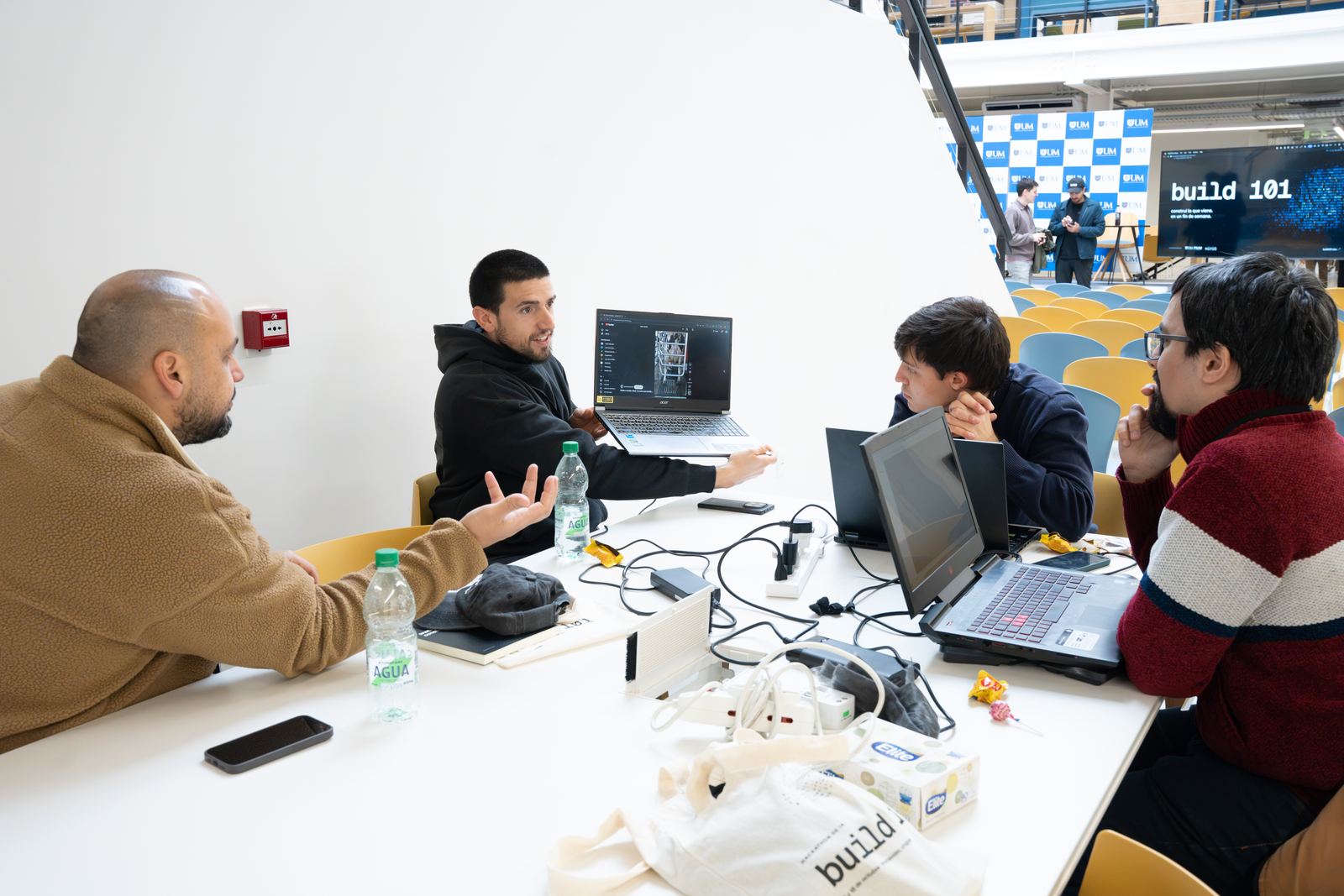
// why we backed it at mutuo
our paths crossed.
At Mutuo we had the same idea. With Nico (Nicolás Saúl, Mutuo's co-founder and CTO) we were looking for a way to organize an AI hackathon. Not for the event itself, but for what we've been after since we started in 2021: community, new people, people who build. Mutuo was born as a channel to understand technology, but what has always driven us is what happens when that understanding turns into action. A hackathon is exactly that, compressed into a weekend.
That's when we crossed paths with Ramiro, Bruno and Mateo, who had the idea at a very early stage. It made no sense to do two. We joined theirs.
We supported them with what we know how to do: communication strategy, Mutuo's channel and community to spread the call for applications, and, from our AI Studio, the promotional videos for social media. The idea was theirs. Our job was to make it travel far. Then we met Mavi and Gabriela from Universidad de Montevideo, and a real power team came together: everyone brought their part and the event grew far beyond what any of us could have achieved alone. And for Mutuo it was also a first: we had never been part of a hackathon. We went to learn the format, and we came away with much more than that.
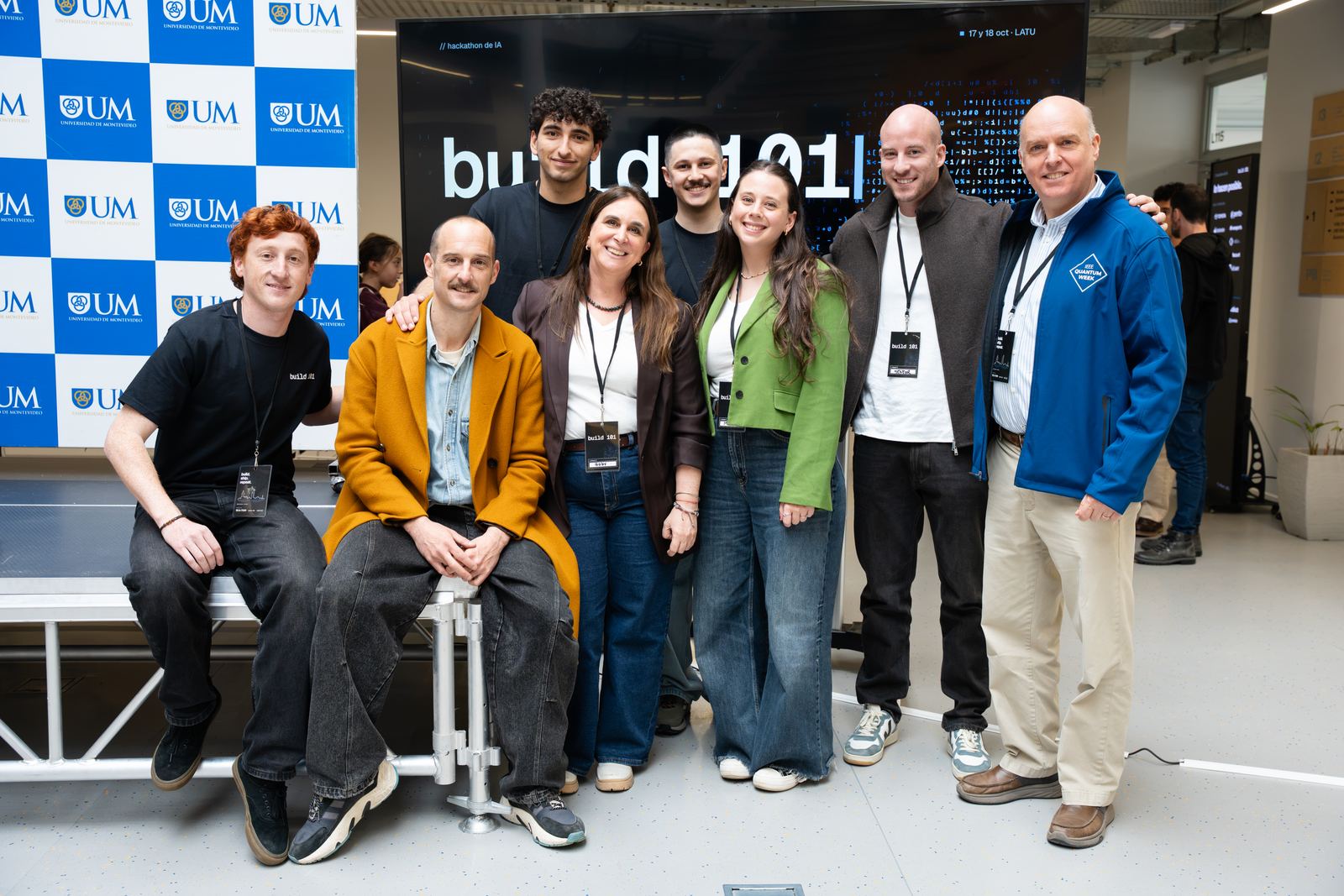
sat 17 · build 101 × UM
Over the moon that Mutuo crossed paths with Ramiro, Bruno and Mateo. The true national heroes behind this historic event that brings together people from all over the country and of all ages.
Nicolás Saúl · co-founder and CTO of Mutuo// the mutuo community on the field
There was also a joy that felt very much our own. Third place, Tiza.ai, went to the team of César Canessa, who comes from Mutuo's IA Nativo program, together with Adrian Mircus and Mauricio Parodi. In the middle of the weekend César had won a computer in a raffle, and the team was called La compu de César ("César's computer"). That's how karma works.
Seeing him on the podium confirmed something we repeat a lot at IA Nativo, and that sometimes sounds like a motivational quote: learning AI isn't about piling up courses or knowing how to code. It's about daring to build.
For years, learning technology meant collecting certificates. One course, then another, then a more advanced one, always with the feeling that you weren't ready yet to make something of your own. AI flips that order. The distance between having an idea and having something that works has shrunk so much that learning now runs the other way: first you do, and by doing you discover what you still need to know.
Knowing how to code helps, of course. But it's no longer the way in. At build 101 it was clear: 86% of commits were written together with an AI agent, and what made the difference wasn't how many lines each person could write, but who was clear about which problem to solve, for whom and how far to take it. That judgment isn't learned by watching lessons. It's trained by building, getting it wrong, showing something half-done and starting over.
That's why at IA Nativo we work with missions, not hours of theory: what counts is what each person is able to set in motion. And that's why a weekend like this teaches so much. It forces you to finish, to show it live and to take responsibility for making what you built actually work.
César dared, and his app is designed to help teachers adapt tests for students the system often leaves behind. And that's no small thing.
Because if this weekend made one thing clear, it's that in this country there's no shortage of talent. There's no shortage of heart either. With the most powerful tool of the decade in their hands and total freedom to choose what to do with it, many teams chose to use it for someone else: a grandmother, a deaf person, a student, a patient, a neighbor. Those good intentions aren't taught in any course, and they're what makes technology worth it.
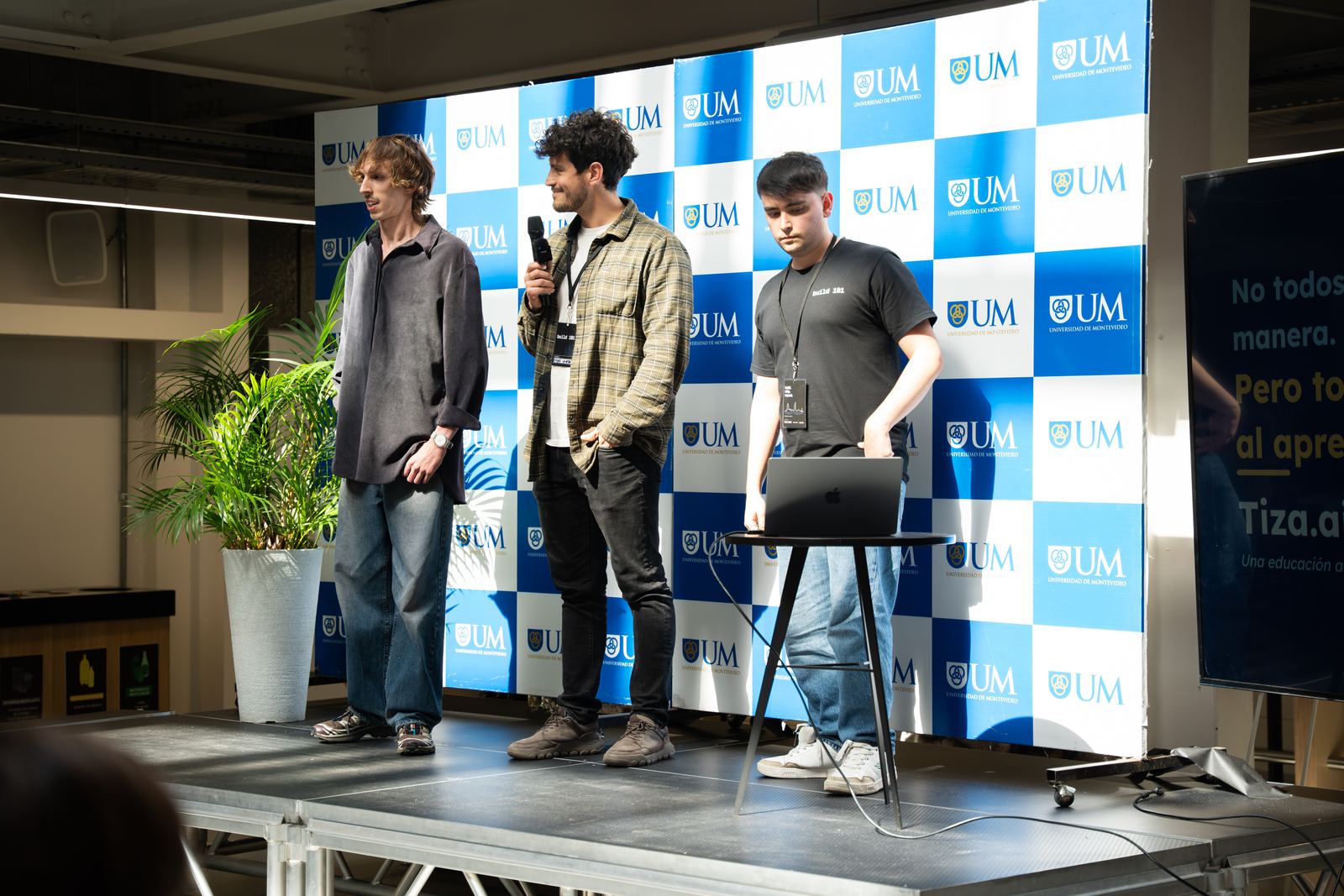
sun 18 · Tiza.ai at the final
And a standing ovation for other members of our community who gave it everything: Santiago Abásolo (I+P, an assistant for landlords) and Rodrigo Portas, Juan Portas and Ezequiel Garcia (BrandIA, an AI branding agency for small businesses).
There's a detail that makes us very proud: the people in our community don't have a developer profile. They don't come from writing code, but from other trades and professions, and they learned to build with AI by training with us at Mutuo. And so they sat in the same room as engineers and computer science students, built complete products in a weekend and presented them live to a jury of founders and investors. They didn't make the podium, but they won anyway: they proved that building with AI is no longer something for the few.
// the closing tweet
At the close of the event, exhausted and with my head still in the hall, I wrote this:
When people come at you with doom and gloom about AI, tell them what happened at @build101 and ask them what they did for others without AI.
I stand by it. There are a lot of people talking about artificial intelligence from the outside, with fear or contempt, and it's good that this debate exists. But meanwhile, 99 people spent a weekend building tools that protect a grandmother, translate for a deaf person and adapt a test for a kid with learning difficulties. The debate matters. What happened at build 101 matters too.
// what's next
we're going for more.
This confirmed a lot of things. That Uruguay has more than enough talent to build with AI. That people aren't waiting for anyone's permission. And that when you give them a space, tools, good mentors and a weekend, products appear that take care of a grandmother, a deaf person or a student who needs another way to take an exam.
It also confirmed that the model works when forces come together: a university that opens its doors, three founders with an idea, a community that spreads it, sponsors that make it possible and a hundred people who show up. None of it would have been enough on its own.
We're already exploring more content and formats together with Ramiro, Bruno and Mateo. This is just getting started.
So when the conversation about artificial intelligence gets stuck in fear or empty promises, it's worth looking at what happened at build 101: people of different ages and professions who, with the right tools and a space to use them, built concrete solutions for others. That's the future we want to build.
// thank you
Thank you for building with us.
To Ramiro, Bruno and Mateo, for the idea and for sticking with it to the end. To Universidad de Montevideo and FIUM, for opening their doors. To the mentors and the jury, for their time and generosity. To the 302 people who applied. And to the 99 who built.
// co-organized by


// gold sponsors










// silver sponsors






// partners








// supporting institutions








// fueling us










// mutuo newsletter
Hear first when we publish on the blog and when Mutuo hosts events like this hackathon. Written in Spanish.
A short email, no spam. Unsubscribe anytime.
// sources
mutuo · build 101 · montevideo, 2026